Wooden Christmas Clipart: A Designer’s Embroidery Review
As a designer who has spent years digitizing patterns and testing them on everything from thick denim to delicate baby onesies, I approach every new asset with a critical eye. We are not just looking for pretty pictures; we are looking for stitchability, durability, and market appeal. Recently, I evaluated Wooden Christmas Clipart to determine its viability for real-world embroidery projects. This isn’t about how it looks on a screen; it is about how it translates into thread, hoop, and fabric.
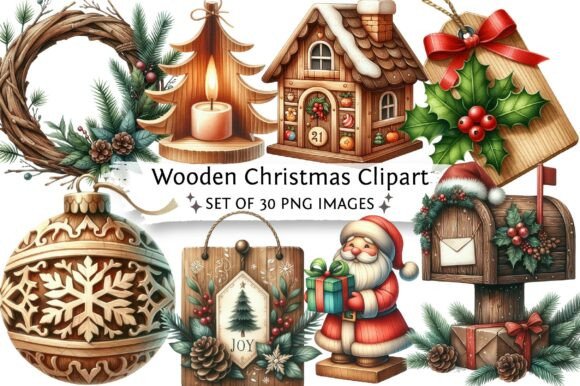
The first impression of this collection is distinct. Unlike the glossy, hyper-realistic holiday graphics that often dominate digital marketplaces, these illustrations carry a tactile, rustic warmth. They evoke the feeling of hand-carved ornaments or vintage wooden toys. For an embroidery designer, this aesthetic is promising because it aligns perfectly with current trends in handmade goods. Customers are increasingly drawn to items that feel organic and nostalgic rather than mass-produced. The visual personality of Wooden Christmas Clipart suggests simplicity and charm, which are crucial traits for successful machine embroidery.
Translating Rustic Charm into Stitch
When preparing a custom embroidered tote bag for a local boutique client, I needed a design that would stand out against natural canvas without looking cluttered. I selected a few key elements from the Wooden Christmas Clipart set to test. The shapes are generally bold and well-defined, which is a significant advantage. In embroidery, fine details can easily get lost or cause thread breaks if they are too intricate for the needle to navigate. These designs, however, rely on strong silhouettes and clear lines.
I found that the layout of these illustrations lends itself well to various stitch types. The broader areas of the wooden textures can be effectively rendered using a fill stitch with a slightly varied density to mimic grain, while the outlines benefit from a clean satin stitch or a decorative running stitch. The mood created is cozy and inviting, making it an ideal choice for holiday gifts that need to feel personal and thoughtful. Whether you are creating a sweatshirt embroidery piece for a family reunion or a small embroidered patch for a winter hat, the design holds its own.
Real-World Application and Fabric Considerations
One of the most important aspects of reviewing any machine embroidery design is understanding where it performs best and where it might struggle. I tested these assets on several different materials. On a sturdy cotton twill apron, the design looked fantastic. The texture of the fabric complemented the rustic theme of the Illustrations, and the stitches lay flat and secure. However, when I moved to a stretchy jersey knit for a baby embroidery project, I had to adjust my approach.
Stretchy fabrics require careful handling. If the stitch density is too high, the fabric will pucker, ruining the finished look. Because Wooden Christmas Clipart features solid shapes, it is essential to use a high-quality cut-away stabilizer to support the garment during and after stitching. I also noticed that on dark fabrics, the contrast becomes critical. If you are using light thread colors on a navy or black background, ensure your digitizing software allows for proper underlay stitches to prevent the background fabric from showing through the top stitches.
For curved surfaces like caps or hats, the design’s size matters. Smaller elements from the clipart set work beautifully as accents on the side of a beanie or the brim of a cap. Larger, more complex compositions should be reserved for flat surfaces like tote bag design projects or pillow covers to avoid distortion. Always check the recommended hoop size before starting. If the design is larger than your standard 4x4 or 5x7 hoop, you may need to split the design or use a larger machine, which adds complexity to the production process.
Commercial Viability for Etsy Sellers and Crafters
For Etsy sellers and small shop owners, the commercial potential of a design is just as important as its aesthetic appeal. Wooden Christmas Clipart fits seamlessly into the "cottagecore" and "modern farmhouse" niches, which remain highly profitable sectors in the handmade market. When creating printable mockup images for your online listings, these designs photograph well because they do not rely on subtle gradients that cameras often fail to capture accurately. Instead, they rely on shape and color blocking, which translates clearly in digital photos.
Using these assets in commercial embroidery projects can enhance brand consistency. If your shop focuses on eco-friendly or vintage-inspired goods, these illustrations reinforce that brand identity. They add value to personalized gift items because they look intentional and curated rather than generic. A simple monogram paired with a small wooden ornament motif from this collection can turn a basic towel into a premium holiday product.
However, caution is advised regarding licensing. Before selling finished product items or using these as design assets in digital products you sell to others, you must confirm the specific license terms provided by the creator. Some licenses allow for unlimited physical sales but restrict the resale of the digital embroidery file itself. Always read the fine print to protect your craft business from legal issues.
Practical Designer Notes for Best Results
To ensure the highest quality output when using Wooden Christmas Clipart, follow these practical steps:
- Test on scrap fabric first: Never run a new design directly on your final product. Use a similar fabric weight and type to check for puckering or thread breaks.
- Check thread color contrast: View your design in black and white mode in your digitizing software. If the details disappear in grayscale, they will likely get lost in the stitching too.
- Review stitch density: Ensure the density is appropriate for your fabric. Too dense, and you risk perforating the material; too sparse, and the backing will show.
- Inspect small details: Zoom in on the tiniest elements. If a line is thinner than the width of your needle, it will not stitch correctly. You may need to simplify certain parts of the applique design or vector art.
- Use proper stabilizer: Match the stabilizer to the fabric. Tear-away for stable woven fabrics, cut-away for knits, and wash-away for delicate or sheer materials.
In conclusion, Wooden Christmas Clipart offers a charming and versatile option for embroidery designers looking to add a touch of rustic holiday spirit to their work. It performs well on a variety of fabrics when handled with care and attention to detail. By understanding the limitations of your machine and the properties of your materials, you can transform these digital illustrations into tangible, high-quality handmade product offerings that customers will love. Whether you are decorating a kitchen towel or creating a line of holiday embroidery apparel, this collection provides a solid foundation for creative and commercial success.