Review: Funny Christmas Middle Finger Xmas PNG for Embroidery
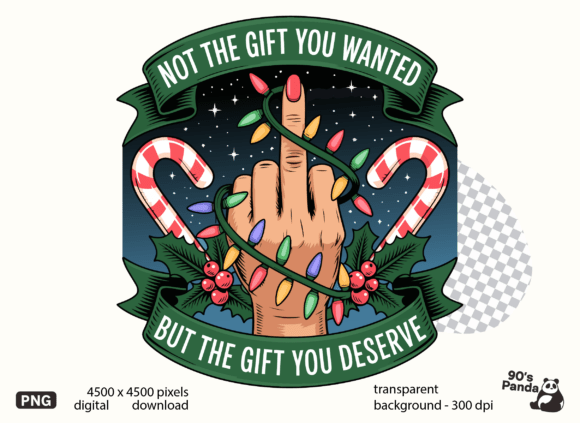
As a designer who has spent countless hours digitizing and testing files for client projects, I have learned that not every graphic translates well to thread. When I first encountered the Funny Christmas Middle Finger Xmas PNG, my initial reaction was one of cautious curiosity. It is bold, irreverent, and undeniably eye-catching. But does it work as a functional machine embroidery design? More importantly, will it hold up on a finished product that a customer pays good money for? Let’s break down this asset from the perspective of practical application, focusing on stitchability, fabric interaction, and market viability.
First Impressions and Visual Personality
The mood of this piece is instantly clear: it is playful, rebellious, and perfect for the "ugly sweater" crowd or anyone tired of traditional holiday cheer. Visually, the layout relies on strong contrasts. For an embroidery project, this is generally a good sign. High-contrast shapes tend to read better from a distance than subtle gradients. However, because this falls under the category of Illustrations, we must consider how those illustrative lines convert to stitches. If the original PNG features thin, wispy lines or complex shading, these can become problematic in embroidery unless properly digitized or simplified.
The visual personality suggests this belongs on casual wear or novelty items rather than formal decor. It screams personality. When I imagine this stitched out, I see it working best with bold satin stitch borders and solid fill stitch areas to maintain clarity. The key here is ensuring the "attitude" of the design isn’t lost in a mess of loose threads or poor density management.
Real-World Application: The Sweatshirt Test
To evaluate its real-world performance, I mentally placed this design on a mid-weight cotton blend sweatshirt. This is a staple item for any Etsy seller or craft business owner during the fourth quarter. On a sweatshirt, the fabric has enough body to support moderate stitch density without puckering excessively. The humor of the Funny Christmas Middle Finger Xmas PNG lands perfectly here. It transforms a basic garment into a conversation starter.
I also considered its use on a canvas tote bag design. Tote bags are durable, but the weave can be coarse. If the design includes tiny details, they might get lost in the texture of the canvas. For a tote, I would recommend scaling the design up slightly to ensure the central motif remains crisp. This makes it an excellent choice for a personalized gift for a friend who appreciates dry humor. It adds value to a simple blank product, turning it into a unique handmade product that stands out in a crowded marketplace.
Apparel and Accessories Considerations
Beyond sweatshirts and totes, where else does this fit? Custom apparel like t-shirts requires careful attention to stabilizer choice. Since t-shirt fabric is stretchy and thin, using a cut-away stabilizer is non-negotiable to prevent distortion. The design’s shape must be balanced; if it is too wide, it might warp across the chest. For embroidered patch creation, this design could shine. Patches allow for higher stitch density and stiffer backing, which preserves the integrity of sharp edges and small details often found in illustrative styles.
However, I would hesitate to place this on a cap. Curved surfaces distort designs, and the horizontal nature of many hand-gesture graphics can look awkward when wrapped around a crown. Similarly, avoid using it on baby embroidery items unless you are certain of the recipient’s sense of humor—and even then, it is a risky move for a professional brand image.
Technical Challenges and Stitching Clarity
When converting a PNG or any raster image into an embroidery file, the biggest hurdle is detail retention. If the Funny Christmas Middle Finger Xmas PNG has intricate linework, you must check the stitch density. Too dense, and the fabric will pucker or the thread will break. Too sparse, and the backing will show through, ruining the visual appeal. I always advise testing the design on scrap fabric first. Use the same thread colors and fabric type you intend to sell.
Pay close attention to thread colors. Holiday themes often use red, green, and white. Ensure there is enough contrast between the hand gesture and any background elements. If the design relies on subtle shading, consider simplifying it into block colors for embroidery. This not only reduces stitch count and production time but also enhances durability. A finished product that looks clean and bold will generate more buyer engagement than one that looks muddy or over-stitched.
Fabric and Stabilizer Selection
The success of this design heavily depends on your material choices. For holiday embroidery on kitchen towels or aprons, use a tear-away stabilizer if the fabric is stable, like linen or heavy cotton. For stretchy fabrics like jersey knits used in sweatshirt embroidery, stick with cut-away stabilizers. Always hoop your fabric tightly but do not stretch it out of shape before stitching. Poor hooping leads to misaligned designs, which kills professionalism and customer trust.
If you are working with dark fabric, consider using a lighter thread for the outline to make the design pop, or add a white underlay if your digitizing software allows. This technique helps the colors stand out against black or navy backgrounds, ensuring the humor is immediately visible.
Commercial Viability and Brand Consistency
For small shop product lines, consistency is key. Does this design fit your brand? If your shop focuses on sweet, traditional nursery decor, this piece might confuse your audience. However, if your brand leans toward modern, edgy, or humorous gifts, it is a strong addition. It can drive traffic to your Etsy listings because it is shareable on social media. People love to post unique, funny items, which provides free marketing for your design assets.
Before selling, confirm the licensing terms. Just because you have the PNG does not mean you have the right to sell finished items commercially. Many designers offer different licenses for personal versus commercial use. Always read the fine print. If you are creating printable mockup images for your store, ensure the digital representation matches the stitched reality. Misleading previews lead to returns and negative reviews.
Final Designer Notes
- Test First: Always stitch a sample on the exact fabric you plan to use for production.
- Check Density: Ensure the running stitch and fill areas are balanced to prevent puckering.
- Contrast Matters: Verify that thread colors stand out against the fabric background.
- License Check: Confirm you have commercial rights before listing items for sale.
- Mockups: Use realistic mockups to show customers how the design looks on actual garments.
In conclusion, the Funny Christmas Middle Finger Xmas PNG has significant potential for the right niche. It is not a universal design, but for creative entrepreneurs targeting a fun-loving demographic, it offers a fresh alternative to standard holiday motifs. With proper digitizing, careful fabric selection, and attention to stitch quality, it can become a best-seller in your commercial embroidery portfolio. Treat it with the technical respect it deserves, and it will reward you with durable, engaging products that customers love to wear and gift.