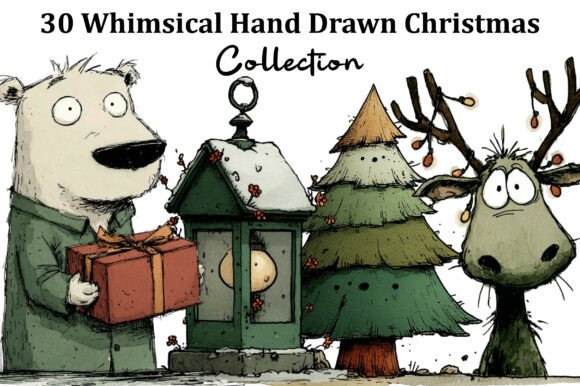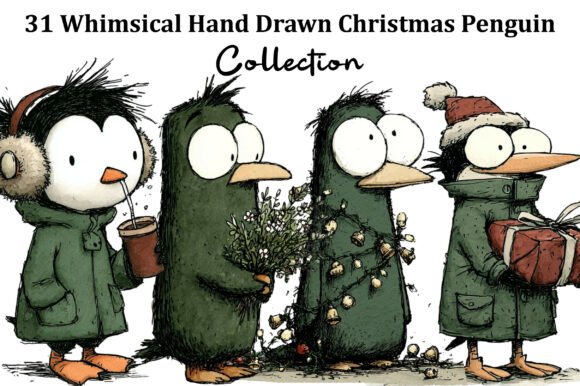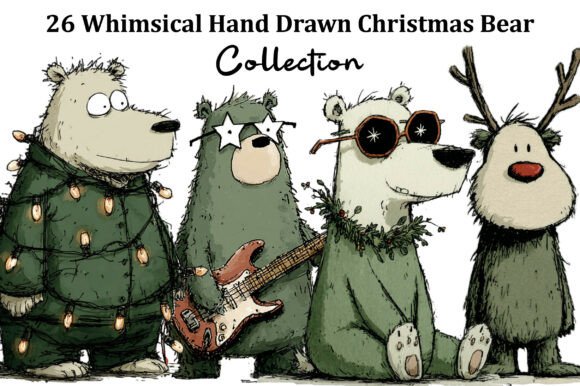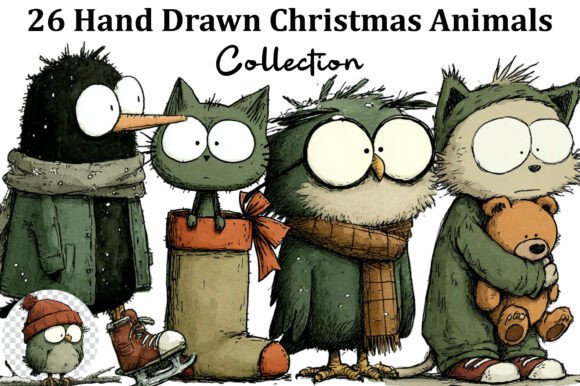
Reviewing Whimsical Hand Drawn Christmas Animals
As a designer who has spent years digitizing patterns and reviewing thousands of machine embroidery design files, I have learned that not every cute graphic translates well to thread. When I first opened the folder for Whimsical Hand Drawn Christmas Animals, my initial reaction was cautious optimism. The preview images suggested a charming, sketch-like aesthetic that fits perfectly into the current trend of imperfect, organic holiday decor. But as any experienced Etsy seller or craft business owner knows, what looks good on a screen does not always stitch out cleanly on fabric.
I decided to put these Illustrations through a rigorous real-world test. My goal was not just to see if they stitched, but to determine if they would hold up in a commercial setting. I imagined a specific scenario: a small batch of custom holiday tote bags for a local boutique. These needed to be durable, visually appealing from a distance, and capable of surviving multiple washes without losing their charm. Here is my practical assessment of how Whimsical Hand Drawn Christmas Animals performs when moved from digital asset to tangible handmade product.
First Impressions and Visual Personality
The immediate strength of this collection is its mood. Unlike rigid, vector-perfect clipart, these designs carry a hand-drawn warmth that feels personal and inviting. For holiday embroidery, this is crucial. Customers are often looking for items that feel nostalgic and cozy rather than mass-produced. The lines appear loose and expressive, which can be a double-edged sword in embroidery. If the digitizer has done their job correctly, these irregular lines should translate into varied stitch angles and densities that mimic pencil or ink strokes.
In terms of layout, the animals are balanced but not overly symmetrical. This asymmetry works in favor of custom apparel like sweatshirts or aprons, where a centered, rigid design can sometimes look stiff. The visual personality suggests these are best suited for projects that prioritize character over precision. Think nursery decor, baby gifts, or casual wear rather than formal corporate branding.
Real-World Application on Fabric
To test the versatility, I considered how these designs would behave on different materials. For a tote bag design, I selected a heavy canvas. The whimsical nature of the animals paired beautifully with the rustic texture of the canvas. However, I noticed that the finer details in the animal’s fur or facial features required careful attention to thread colors. Using a high-contrast thread against a dark fabric helped define the shapes, but on lighter fabrics, the subtle shading might get lost if the stitch density is too low.
When applying the design to a fleece sweatshirt embroidery project, the results were mixed. The soft pile of the fleece tended to swallow some of the thinner running stitches. This is a common issue with hand-drawn styles that rely on single-line details. I found that using a cut-away stabilizer was non-negotiable here to prevent distortion. For smoother fabrics like cotton twill or poplin, the design shone brighter. The satin stitch borders around the animals popped nicely, providing a clean edge that framed the more textured fill stitch areas inside.
For baby embroidery, such as onesies or burp cloths, the scale of the design matters immensely. These animals are detailed enough to be interesting but not so dense that they become scratchy or stiff against sensitive skin. However, I would advise avoiding the largest sizes for infant wear, as the cumulative weight of the thread could pull on lightweight knits.
Technical Considerations for Designers
Before you load this digital embroidery file into your machine, there are several technical factors to review. Since these are hand-drawn style design assets, they likely utilize a mix of stitch types. You must check the stitch density in your software. If the density is too high in the shaded areas, you risk needle breaks or fabric puckering, especially on stretchy materials. Conversely, if it is too low, the underlying fabric may show through, ruining the illusion of the drawing.
One critical area to inspect is the transition between colors. Hand-drawn art often uses hatching or cross-hatching for shading. In embroidery, this translates to complex color changes. Ensure your machine can handle the number of stops required, or consider simplifying the color palette for a cleaner look. Testing the design in black and white mockups is an excellent way to verify that the contrast holds up without relying on color differentiation.
Also, pay close attention to the smallest details. Tiny eyes or whiskers rendered in running stitch can easily unravel if not properly locked or tacked down. For items like embroidered patch creations, where the edges will be cut, ensure there is a sufficient satin border or merrowed edge plan to secure all internal stitches.
Where to Use Caution
While Whimsical Hand Drawn Christmas Animals is versatile, it is not universal. I would hesitate to use these on curved surfaces like baseball caps unless the design is significantly scaled down and simplified. The complex curves of the hand-drawn lines can distort easily on the tight curve of a cap front panel. Similarly, avoid using these on very thin or sheer fabrics without a robust stabilizing strategy, as the weight of the thread may cause sagging.
For products that require frequent, heavy washing, such as kitchen towels or pet bandanas, ensure that the stitch count is optimized for durability. Delicate, sparse stitching may fray faster than denser designs. Always test on scrap fabric first to gauge how the threads interact with the specific fabric texture you are using.
Commercial Value and Brand Consistency
From a business perspective, these designs add significant value to a small shop product line. They evoke emotion, which drives sales. For an Etsy seller, offering personalized items featuring these animals can differentiate your brand from competitors using generic clipart. The unique, artistic feel builds customer trust and enhances the perceived quality of the finished product.
However, professionalism lies in the execution. A poorly stitched whimsical design looks messy, not charming. Ensure your tension is perfect and your needles are sharp. Use these designs to create cohesive collections—pairing a matching animal on a tote bag, a mug rug, and a pillow cover can encourage bundle purchases. When creating printable mockup previews for your online store, make sure the lighting highlights the texture of the stitches to convey the tactile quality of the item.
Final Verdict for Craft Entrepreneurs
Whimsical Hand Drawn Christmas Animals is a strong contender for holiday collections, provided you respect its technical nuances. It is ideal for commercial embroidery projects that target the gift market, particularly for children, families, and those who appreciate artisanal aesthetics. Before selling any personalized gift or listing a new item, always confirm the licensing terms associated with the embroidery file. Most designers allow commercial use of finished physical items, but restrictions may apply to digital redistribution.
By treating these illustrations with the same care you would give a custom digitized pattern, you can create stunning, high-quality items that resonate with buyers. Test your hoop size, choose your stabilizer wisely, and let the whimsical nature of the design bring joy to your next embroidery project.